CBD Liscense

How to Get a CCRA Cannabis License in Pakistan in 2026: Cultivation, Processing & R&D

Pakistan’s cannabis and industrial hemp sector is moving into a more formal regulatory environment in 2026. The Cannabis Control & Regulatory Authority (CCRA) has introduced an electronic licensing system covering activities across cultivation, processing, extraction and the wider cannabis supply chain. The Authority announced that its latest E-License Portal went live on May 11, 2026.

For businesses, farmers, researchers and investors interested in entering the sector legally, the important question is no longer simply “Can I grow hemp?” but rather:

Which CCRA license applies to my activity, what requirements do I need to meet, and how do I apply?

This guide walks through the main CCRA license categories for cultivation, processing and R&D, the eligibility requirements, documentation, fees and the official application portal.

Important: Licensing requirements can change as the CCRA framework develops. This article reflects information published by the CCRA in 2026 and should not be treated as legal advice.


What is the CCRA?

The Cannabis Control & Regulatory Authority is Pakistan’s regulatory body responsible for overseeing activities involving industrial and medicinal cannabis, including cultivation, extraction, manufacturing, transportation and related regulated activities.

The CCRA’s licensing framework currently covers multiple stages of the cannabis value chain, including:

  • Cultivation
  • Hemp processing
  • Cannabis extraction
  • Pharmaceutical manufacturing
  • Synthetic/biosynthetic CBD manufacturing
  • Research & development
  • Laboratory testing
  • Storage and warehousing
  • Transportation and logistics
  • Import and export

The CCRA’s published license table currently marks these categories as active.


Which CCRA License Do You Need?

The first step is identifying what you actually intend to do.

For this guide, three areas are particularly relevant:

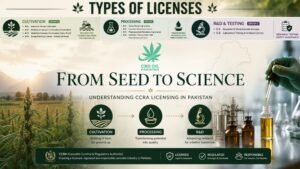
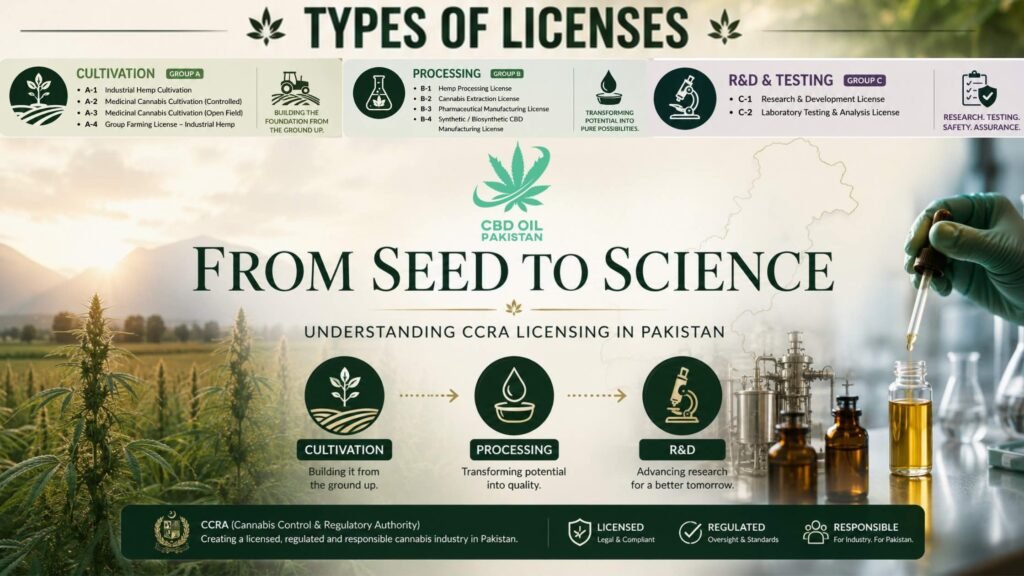
1. Cultivation — Group A

The CCRA currently lists several cultivation licenses:

LicenseActivity
A-1Industrial Hemp Cultivation
A-2Medicinal Cannabis Cultivation — Controlled
A-3Medicinal Cannabis Cultivation — Open Field
A-4Group Farming License — Industrial Hemp

For someone interested specifically in industrial hemp, A-1 is the key category to investigate.

The published prerequisite document further divides A-1 into Standard, Advanced and Premium classes based on operational scale. A-1 Standard covers up to 50 acres, Advanced covers 51–250 acres, and Premium covers operations above 250 acres or export-oriented operations.


2. Processing & Manufacturing — Group B

If your business will process hemp or cannabis-derived material rather than cultivate it, the relevant license depends on the activity.

B-1 — Hemp Processing

This covers hemp processing, with the CCRA’s prerequisite document describing the classes from basic fibre processing through integrated and fully automated industrial facilities.

B-2 — Cannabis Extraction

This category covers cannabis extraction, with different classes covering pilot-scale, commercial and GMP/export-oriented extraction operations.

B-3 — Pharmaceutical Manufacturing

B-3 is intended for pharmaceutical manufacturing, including formulation and packaging and higher-level controlled manufacturing operations.

B-4 — Synthetic/Biosynthetic CBD Manufacturing

B-4 covers synthetic or biosynthetic CBD manufacturing rather than conventional plant cultivation/extraction.

The important distinction: simply selling a cannabinoid-containing product does not automatically mean that every business needs the same license. The applicable requirements depend on what your business actually does within the regulated supply chain.


3. Research & Development — C-1

Businesses, universities and researchers conducting cannabis-related research can look at the C-1 Research & Development License.

The CCRA currently lists three C-1 classes:

  • Standard: Academic / pilot research
  • Advanced: Applied industrial R&D
  • Premium: Clinical trials and international collaboration

The published CCRA requirements also call for a detailed research protocol or project proposal, along with information about the principal investigator and key research staff. Clinical-trial work additionally requires approval from an Institutional Review Board or Ethics Committee.

This is particularly relevant for organizations researching cannabinoids, extraction methods, formulations, agricultural genetics or other applications of the cannabis plant.


Who Can Apply for a CCRA License?

The CCRA’s published eligibility checklist states that an applicant must generally:

  • Be a Pakistani citizen or an entity incorporated in Pakistan.
  • Be registered with the FBR and possess a valid NTN and, where applicable, Sales Tax Registration.
  • Not be a declared loan defaulter.
  • Not be blacklisted by a government or statutory body.
  • Not fall under the relevant Fourth Schedule restrictions.
  • Provide police clearance certificates and non-conviction affidavits for directors/partners.
  • Undertake compliance with the applicable Act, rules and CCRA directions.
  • Demonstrate financial and technical capacity appropriate to the requested license class.

There is also an important exception for cultivation: the CCRA states that a cultivation-only license can be issued to an individual, meaning incorporation as a public/private company is not necessarily required for that particular activity.

For foreign investors, the CCRA’s published criteria state that a joint venture with a Pakistani entity holding at least 51% is required.


What Documents Are Required?

Before starting an application, applicants should prepare their documentation.

The CCRA’s common-document checklist includes:

  • Certificate of incorporation/registration
  • Memorandum and Articles of Association or partnership deed
  • Board resolution or Power of Attorney
  • CNIC/passport documentation
  • Shareholding and beneficial ownership information
  • Bank account details and recent statement or proof of funds
  • Police clearance certificates
  • Affidavit of non-conviction
  • Legal compliance undertaking
  • No-dispute certificate
  • Relevant SECP forms
  • Land-use NOC where applicable
  • State Bank of Pakistan NOC where applicable for foreign investment/export/import-related licenses

Additional documents depend on what you’re applying for.

For cultivation

The CCRA lists requirements including:

  • Land ownership or valid long-term lease
  • GPS coordinates
  • GIS mapping
  • Site plan
  • Cultivation plan
  • Security plan
  • Genetics/source documentation for medicinal cannabis
  • Group-farming agreement where applicable

For processing/manufacturing

Applicants may need:

  • Facility layout
  • Machinery/equipment list
  • GMP/GACP compliance plan
  • SOPs
  • Waste-management plan
  • Security plan
  • Relevant API and technical-staff information for applicable B-2/B-3 operations

For R&D

The CCRA specifically identifies:

  • Research protocol/project proposal
  • Relevant ethics/IRB approval for clinical trials
  • Qualifications and experience of the principal investigator and research team

How to Apply Through the CCRA E-License Portal

The CCRA has moved licensing into its official E-Licensing Portal, which the Authority describes as a single-window platform for cannabis and cannabis-derivative licensing.

Step 1 — Create your account

Start at the official portal:

CCRA E-License Portal

The registration page asks for information including:

  • Applicant type
  • Full name
  • Email
  • Mobile number
  • CNIC
  • NTN
  • Password

Use the official CCRA portal rather than third-party agents or unofficial websites. The CCRA has specifically warned that cannabis licenses are issued only through its official E-License Portal and has cautioned applicants about fraudulent licensing claims.

Step 2 — Determine your license category

Before submitting anything, establish whether your operation falls under:

A — Cultivation
B — Processing/Manufacturing
C — Research & Testing

The class you select should correspond to the scale and nature of the proposed operation.

Step 3 — Prepare your supporting documentation

Gather the common documents and the activity-specific documents before beginning the application. This is particularly important for cultivation, where land documentation, GIS information, security arrangements and cultivation plans are part of the published requirements.

Step 4 — Submit through the official portal

The CCRA’s digital licensing system is designed to handle licensing applications and renewals electronically. The Authority also provides e-License verification through the portal, where a license can be checked using the CNIC and license number.

Step 5 — Keep your license and compliance records current

Licensing isn’t simply a one-time registration. The CCRA publishes annual renewal fees for its license classes, and applicants should account for ongoing regulatory and compliance requirements when planning their business.


How Much Does a CCRA License Cost?

Fees depend heavily on the category and class.

For example, the currently published A-1 Industrial Hemp Cultivation fees are:

ClassApplicationIssuanceAnnual Renewal
StandardPKR 100,000PKR 300,000PKR 200,000
AdvancedPKR 200,000PKR 800,000PKR 500,000
PremiumPKR 300,000PKR 1,500,000PKR 900,000

For B-1 Hemp Processing, the published fees range from PKR 300,000 application / PKR 1.2 million issuance for Standard to PKR 800,000 application / PKR 4 million issuance for Premium.

For C-1 Research & Development, the published fees are:

  • Standard: PKR 50,000 application + PKR 300,000 issuance
  • Advanced: PKR 150,000 application + PKR 800,000 issuance
  • Premium: PKR 300,000 application + PKR 1.5 million issuance

These are CCRA-published licensing fees and do not represent the total cost of establishing an operational facility, meeting technical requirements, testing, security, land, equipment or other regulatory obligations.


What About Laboratory Testing?

Testing has its own regulatory category.

The CCRA lists C-2 Laboratory Testing and Certification, including different classes for potency testing, broader contaminant testing and accredited reference-laboratory operations.

This is significant for businesses that want to build a more robust cannabis/hemp supply chain because regulatory compliance isn’t simply about obtaining a cultivation or processing license. Quality control, testing and traceability are also becoming part of the ecosystem.


Where Does CBD Fit Into Pakistan’s Emerging Hemp Industry?

CBD is one part of the broader cannabis and hemp ecosystem being formalized by the CCRA.

However, businesses should avoid assuming that “CBD” automatically means one particular license. The applicable category depends on the activity—for example, cultivation, extraction, pharmaceutical manufacturing, synthetic/biosynthetic manufacturing, testing, import or another regulated activity.

That distinction matters for anyone considering launching a CBD business in Pakistan.


What Does This Mean for Consumers?

The emergence of a formal licensing and testing framework is also important from a consumer perspective.

Instead of relying solely on marketing claims, consumers can increasingly look for things such as:

  • Where the raw material comes from
  • How the product is manufactured
  • Whether appropriate testing has been conducted
  • Whether the business operates within the applicable regulatory framework
  • Whether claims about a product can actually be substantiated

For a developing industry, traceability and transparency matter just as much as the product itself.


Where Does Biohack Bliss Fit In?

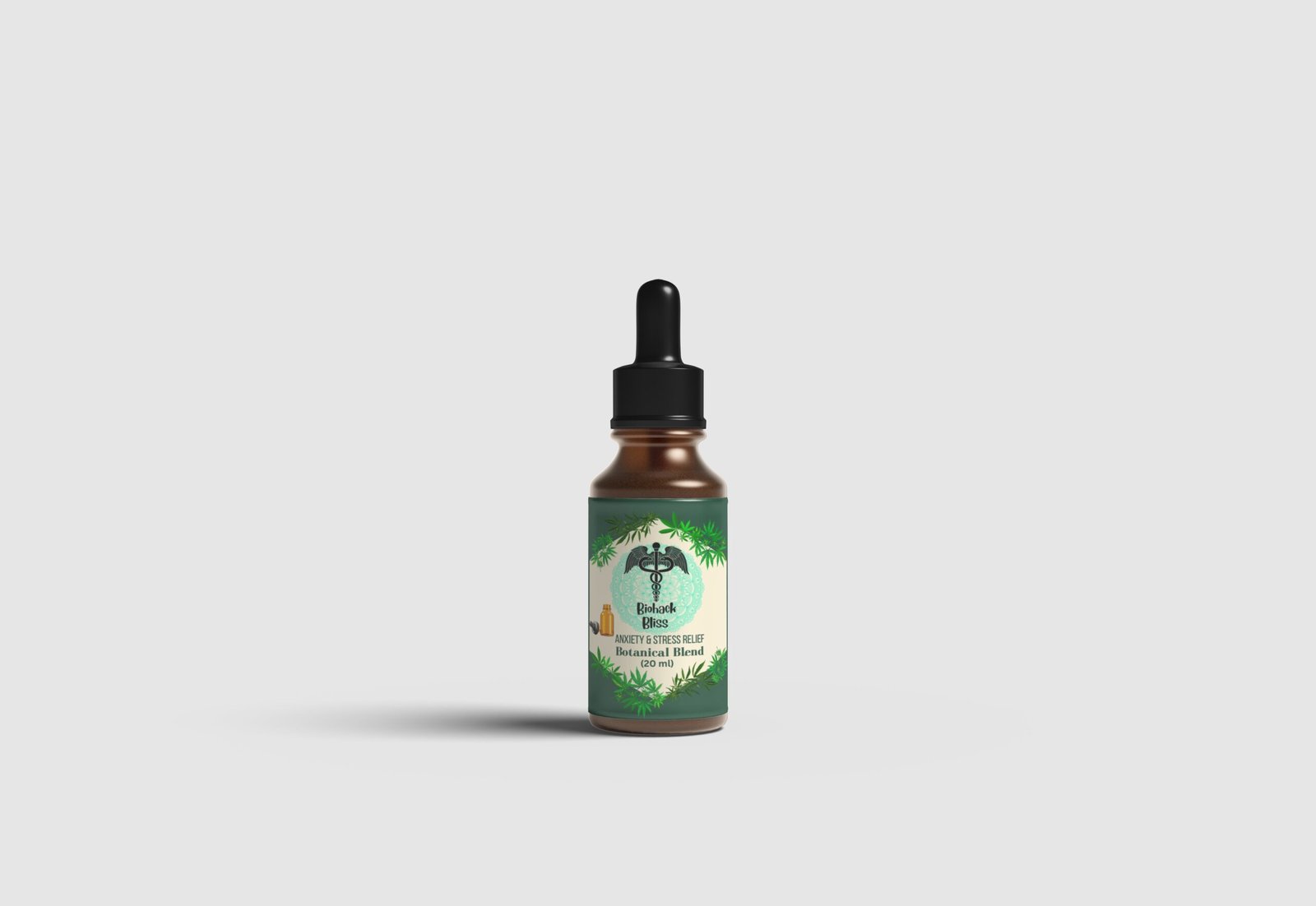
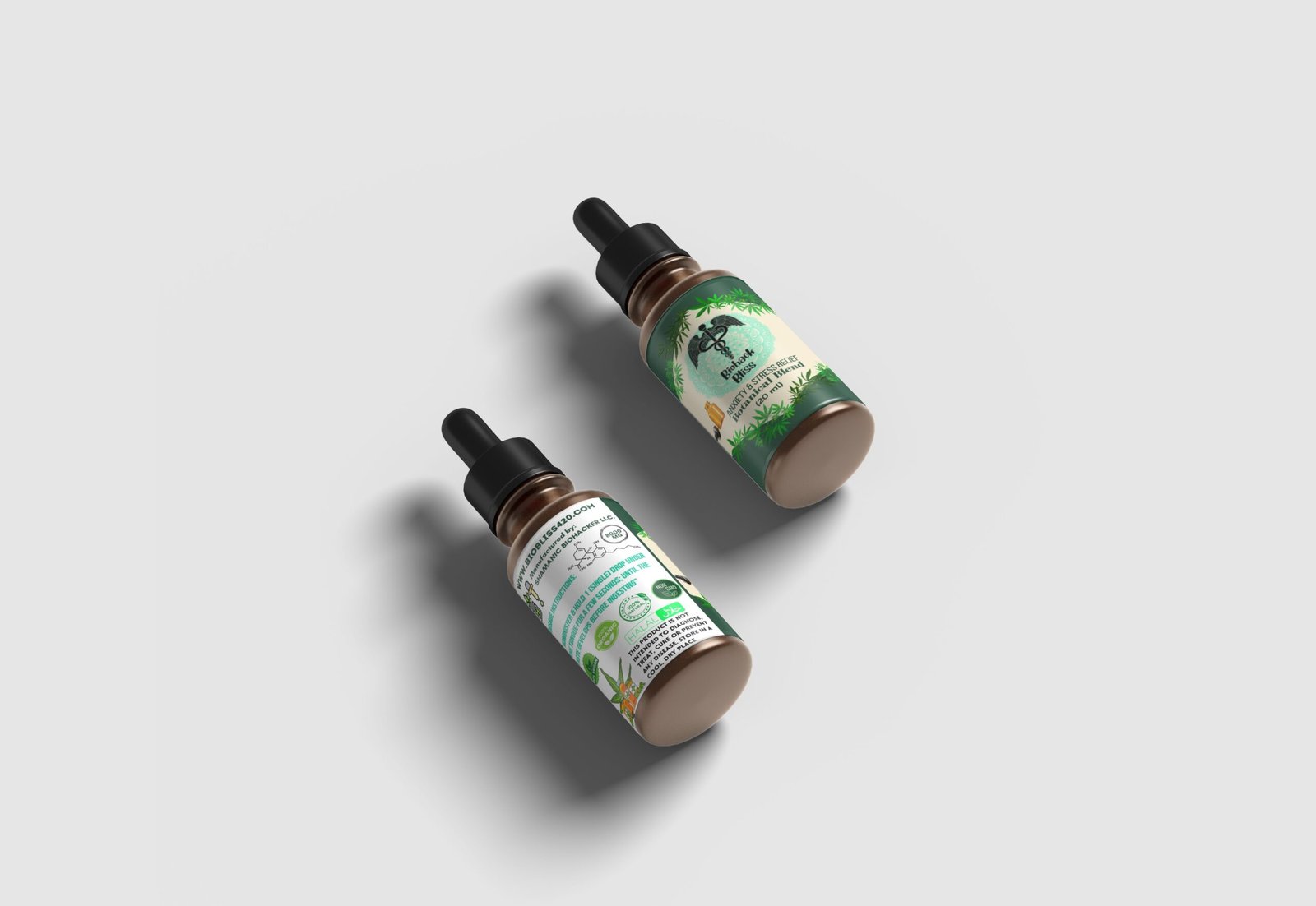
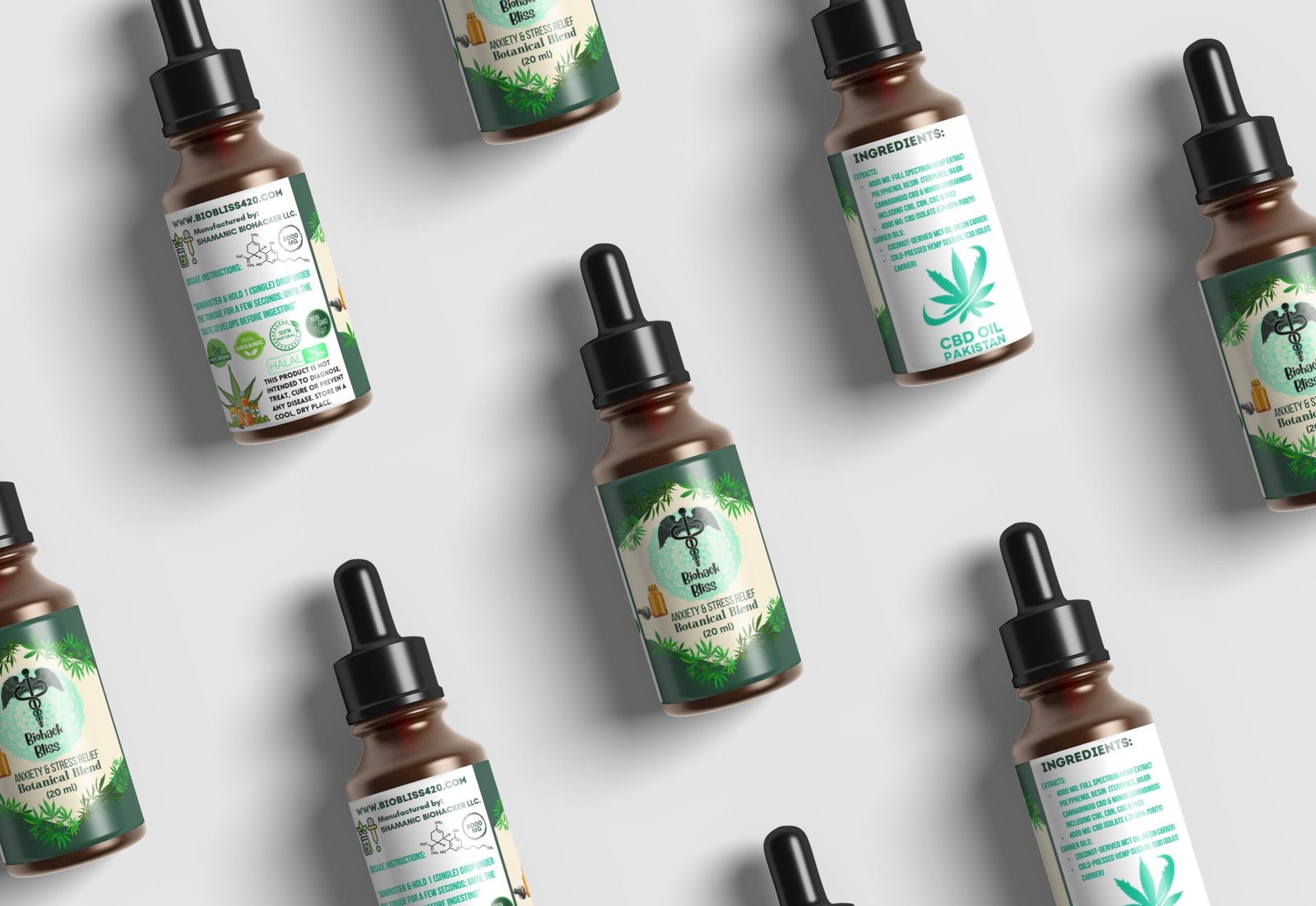
For consumers interested in botanical wellness products, Biohack Bliss takes a different approach from positioning itself as a conventional pharmaceutical product.

Biohack Bliss Anxiety & Stress Relief Botanical Blend is presented as a botanical product, with the brand focusing its communication on botanical ingredients and wellness rituals rather than making pharmaceutical-style treatment claims.

The important distinction is that product marketing compliance and CCRA licensing are separate questions. A compliant advertising approach does not itself establish that a product or business holds a particular CCRA license.

For brands operating in this space, the safest strategy is to understand both sides:

Regulatory compliance for the underlying business and product + platform-compliant communication for digital marketing.

That distinction becomes increasingly important as Pakistan’s cannabis industry develops.


Final Checklist for Prospective Applicants

If you’re considering entering Pakistan’s regulated cannabis/hemp sector in 2026, start with these questions:

1. What are you actually doing?
Cultivation, processing, extraction, manufacturing, R&D or testing?

2. Which CCRA category applies?
A, B or C—and which specific license?

3. What scale are you operating at?
Standard, Advanced or Premium?

4. Do you meet the eligibility criteria?

5. Do you have the required land, facility, technical and financial documentation?

6. Are your SOPs, security, testing and compliance plans ready?

7. Have you registered through the official CCRA E-License Portal?

8. Are you relying on official CCRA information rather than an unofficial agent?

The official portal is:

elicense.ccra.gov.pk

And the CCRA’s official licensing requirements can be reviewed here:

CCRA License Prerequisites


The Bottom Line

Pakistan’s cannabis and industrial hemp sector is moving toward a licensed, structured and digitally administered framework. The CCRA now provides specific pathways for cultivation, processing, extraction, manufacturing, R&D and laboratory testing, with applications moving through its official E-License Portal.

For anyone looking to enter the industry, the best starting point is not an unofficial consultant or social-media claim—it’s the official CCRA framework, the applicable license category and the E-License Portal.

And for consumers, the same principle applies: know what you’re buying, know who makes it, and look for transparency behind the label.

This article is informational and is not legal advice. CCRA requirements, fees and procedures may change; applicants should verify the latest requirements directly with the Authority before submitting an application.


Leave a Comment

Your email address will not be published. Required fields are marked *

Shopping Cart